TROOPERS has a long history of theming the conference
every year. Usually we pick a surreal topic, a fun story which we think is worth
to pick up on. Some of it starts as a crazy thought, others have been the result
of long discussions. Most of them are online, only our master piece from 2016 is
securely stored in the company’s vaults.
However, this year was different. Traveling across the globe, speaking at and
attending other conferences, connecting with our peers and the community, we
felt that 2017 was a particularly tough year for many of us, both professionally
and personally. There was this doom and gloom baseline to it.
In mid-October our friend Bryan Fite aka Angus Blitter invited the community for
the ninth edition of Day-Con. Bryan’s annual security
summit, which we regard as the sister event of TROOPERS, is a pretty good reason
to visit lovely Dayton, Ohio.
And so we did… ERNW sent in five delegates. Delegates is Day-Con-speak for all
attendees and speakers and such a subtle choice of wording sets the tone for the
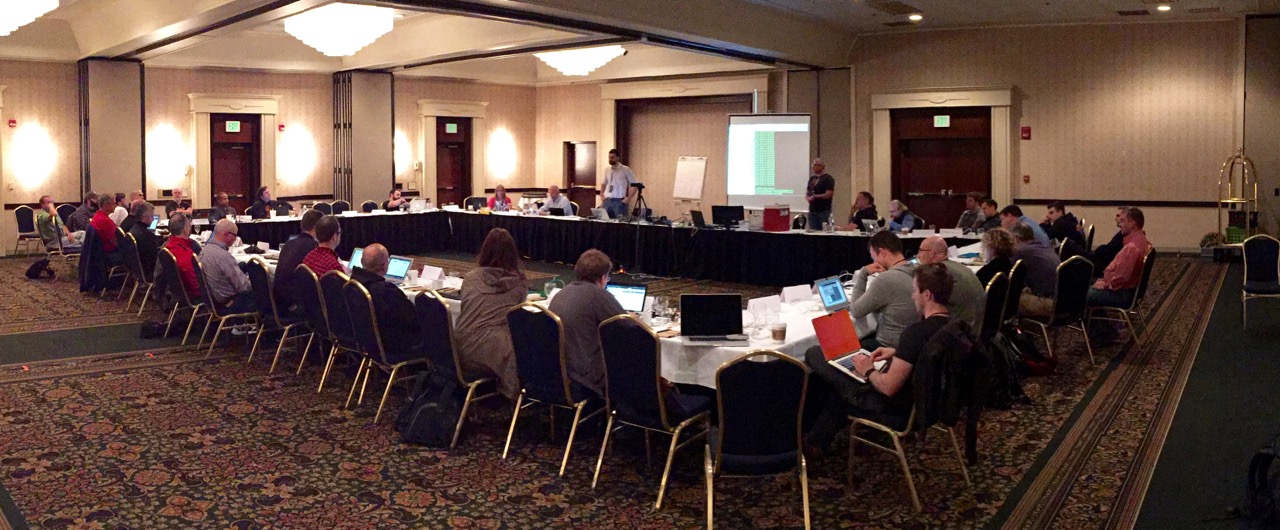
whole event. People seemed to be really focused and the
roundtable-like setting during the talks (see above) provided a cozy atmosphere
for in-depth expert chatting.
While searching for some photos for my
last blog post on Thinkst Canary
I found a couple more from our recent trip to
Black Hat USA and
DEF CON, which I
consider worth sharing. Nothing too technical, just some visual impressions and
comments from my side. Let’s get it on!
My colleague Patrik and myself arrived one day early before the briefings and
headed right to Mandalay Bay to check out the Black Hat venue and get a feel for
the city. The sheer size of just everything is mind-blowing.
Well, it’s a canary (these cute yellow songbirds some people have as a pet), and
its main feature is that it dies before you will.
What the hack [pun intended]? And by the way… what has this to do with IT
Security? Well… let me first quote Wikipedia on the birds:
“Canaries were once regularly used in coal mining as an early warning system.
Toxic gases such as carbon monoxide, methane or carbon dioxide in the mine
would kill the bird before affecting the miners. Signs of distress from the
bird indicated to the miners that conditions were unsafe.”
Source: https://en.wikipedia.org/wiki/Domestic_canary#Miner.27s_canary
with the rise of low-cost 3D-printers in the homes of thousands [1] of
enthusiastic tinkerers the word spreads about these magical machines which can
produce any mechanical, artsy, useful or useless parts you might come up with.
Standing in living rooms worldwide, they don’t seem like a big threat [2] to
anybody. But what happens if you connect them to the Internet?
today we welcomed Michael Ossmann at the
ERNW headquarter for an exclusive workshop on his
HackRF
gadget. Everybody was quite excited to get hands-on with this shiny piece of
hardware, which is currently
crowd-funded on Kickstarter.
For everybody who’s not familiar
with Software Defined Radio (SDR):
Let’s regard it as the ultimate tool when working with radio signals.
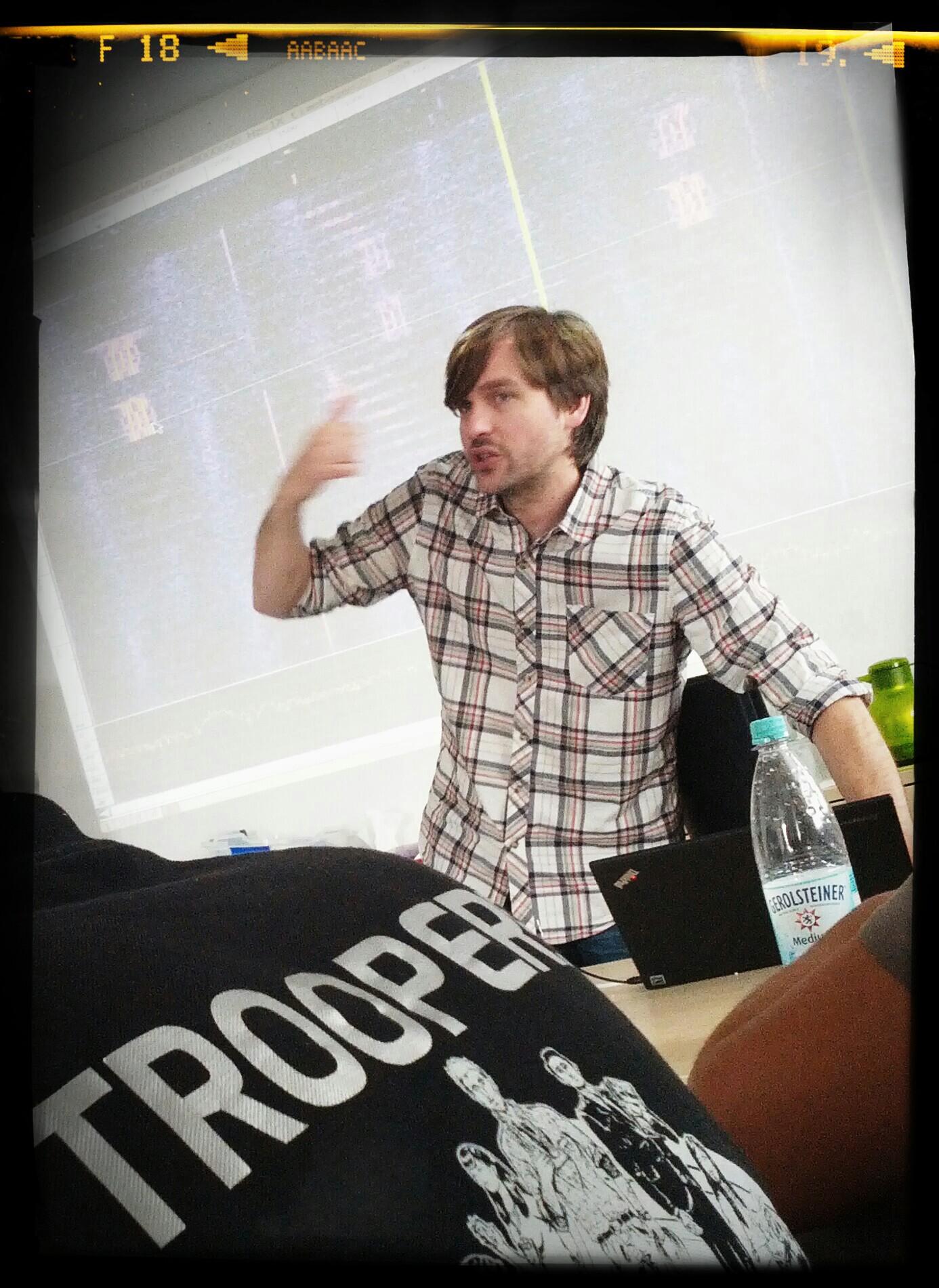
Michael Ossmann in the house.
Let’s quote Michael’s campaign website:
Transmit or receive any radio signal from 30 MHz to 6000 MHz on USB power
with HackRF. HackRF is an open source hardware project to build a Software
Defined Radio (SDR) peripheral.
**Dear blog followers, TROOPERS speakers & attendees,
**we hope you’re doing fine! Today we have a couple of great things to share
with you:
TROOPERS14
Let’s start with a date. Get your calendar and mark March 17th – 21st 2014.
It’s your TROOPERS14 holidays. One week full of high-end education, workshops,
talks, reconnecting with friends, action, delicious food and one or the other
party. You know the drill – more details further down.
A
quick update on the workshop we’ve just finished at
Hack in the Box 2012 Amsterdam:
Due
to popular demand we decided to bring the slides online without wasting any more
time. The official website of the conference is currently experiencing some
problems due to high interest in all the stuff what was released in the last two
days. Great conference!
This is a guest post by the SAP security expert Juan Pablo Perez-Etchegoyen,
CTO of Onapsis. Enjoy reading:
At Onapsis we are continuously researching in the ERP
security field to identify the risks that ERP systems and business-critical
applications are exposed to. This way we help customers and vendors to increase
their security posture and mitigate threats that may be affecting their most
important platform: the one that stores and manages their business’ crown
jewels.





 A
quick update on the workshop we’ve just finished at
A
quick update on the workshop we’ve just finished at